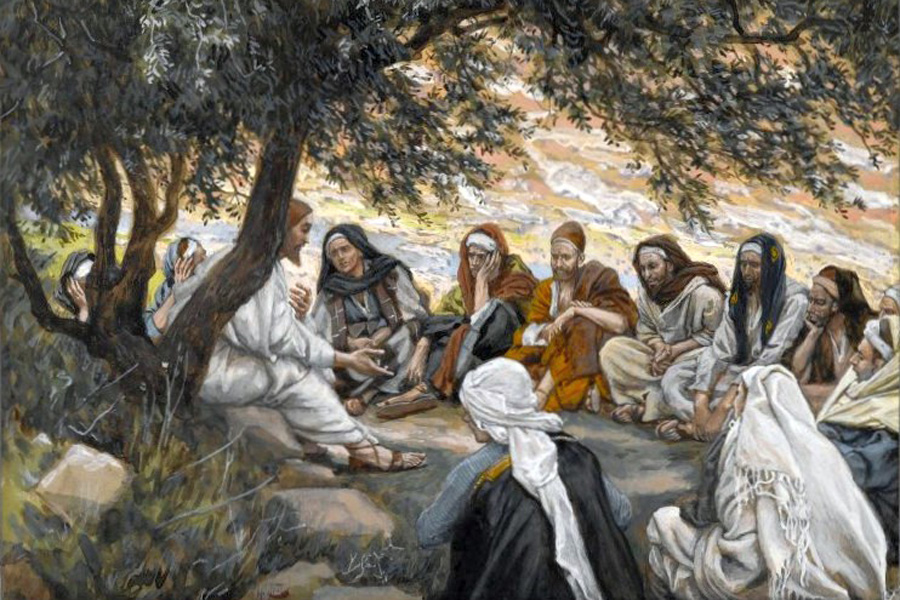
The Sower and the Disposition of Our Heart.
by Zoraya Garcia, Pastoral Assistant | 07/12/2026 | This Sunday's ReadingIn Chapter 13 of the Gospel according to Matthew, Jesus begins to teach through parables, using simple images from everyday life to reveal profound truths about the Kingdom of God. The Parable of the Sower is one of the best-known, yet also one of the most challenging, because it invites us not merely to listen to the Word, but to ask ourselves how we are welcoming it into our lives. The sower goes out to sow without making distinctions. The seed falls on the path, on rocky ground, among thorns, and on good soil.
The sower’s generosity reminds us that God never tires of speaking to each person's heart. He never ceases to sow His grace, His love, and His truth, even when He knows He will often encounter resistance. The seed is always good; what determines the fruit is the quality of the soil that receives it. Jesus Himself explains that the seed represents the Word of God. However, hearing it is not enough. The true disciple is not simply someone who hears the Gospel every Sunday, but someone who allows that Word to transform their thoughts, their decisions, and their way of life. In this sense, the parable also describes the process of discipleship. The hardened path represents a closed heart—one that listens without allowing itself to be challenged. The rocky ground reflects the person who receives the message with enthusiasm but abandons the faith when trials arise or the demands of following Christ become apparent. Thorns symbolize worries, the desire for riches, excessive busyness, and anything else that takes the place belonging only to God. These realities do not destroy the seed; they simply prevent it from bearing fruit. Good soil, on the other hand, is the image of the authentic disciple. This is not a perfect person, but someone who cultivates a heart that is humble, open, and persevering. They listen to the Word, understand it, cherish it, and put it into practice. Such daily faithfulness bears abundant fruit: a steadfast faith, a hope that does not fade amidst difficulties, and a charity that manifests itself in service to others. In a culture that prizes the immediate, the Gospel reminds us that bearing fruit takes time. A disciple matures gradually, allowing God to work within. Just as a farmer prepares the soil, clears away weeds, and tends the seed, we too are called to prepare our hearts through prayer, the reading of Sacred Scripture, participation in the sacraments, and a constant conversion of life. Being a disciple does not consist merely of knowing Jesus’s teachings, but of allowing them to shape our entire existence. A good disciple learns from the Master, walks with Him, and makes Him present wherever they live: in their family, at work, at school, in the parish community, and in society. The best evidence that the seed has taken root is not words, but the visible fruits of a transformed life. Today, the Lord continues to sow the seed in each of us. With God’s grace, our hearts can be cultivated and renewed. Let us ask the Lord to grant us a docile and generous heart, capable of receiving His Word with joy and perseverance. May each of us be that good soil that yields abundant fruit, becoming a faithful disciple who proclaims the Gospel not only through words but through the witness of a life fully given to Christ. (ZG)
El Sembrador Y La Disposición De Nuestro Corazón.
En el capítulo 13 del Evangelio según san Mateo, Jesús comienza a enseñar mediante parábolas, utilizando imágenes sencillas de la vida cotidiana para revelar profundas verdades del Reino de Dios. La parábola del sembrador es una de las más conocidas, pero también una de las más desafiantes, porque no nos invita únicamente a escuchar la Palabra, sino a preguntarnos cómo la estamos acogiendo en nuestra vida. El sembrador sale a sembrar sin hacer distinciones. La semilla cae en el camino, en terreno pedregoso, entre espinos y en tierra buena.
La generosidad del sembrador nos recuerda que Dios no se cansa de hablar al corazón de cada persona. Él no deja de sembrar su gracia, su amor y su verdad, aun cuando sabe que muchas veces encontrará resistencia. La semilla siempre es buena; lo que determina el fruto es la calidad del terreno que la recibe. Jesús mismo explica que la semilla representa la Palabra de Dios. Sin embargo, escucharla no es suficiente. El verdadero discípulo no es simplemente quien oye el Evangelio cada domingo, sino quien permite que esa Palabra transforme sus pensamientos, sus decisiones y su manera de vivir. En este sentido, la parábola es también una descripción del proceso del discipulado. El camino endurecido representa al corazón cerrado, que escucha sin dejarse interpelar. El terreno pedregoso refleja a quien recibe el mensaje con entusiasmo, pero abandona la fe cuando aparecen las pruebas o las exigencias del seguimiento de Cristo. Los espinos simbolizan las preocupaciones, el deseo de riquezas, el activismo y todo aquello que ocupa el lugar que solo Dios debe tener. Estas realidades no destruyen la semilla; simplemente impiden que produzca fruto. La tierra buena, en cambio, es la imagen del discípulo auténtico. No es una persona perfecta, sino alguien que cultiva un corazón humilde, disponible y perseverante. Escucha la Palabra, la comprende, la guarda y la pone en práctica. Esa fidelidad cotidiana produce frutos abundantes: una fe firme, una esperanza que no se apaga en medio de las dificultades y una caridad que se manifiesta en el servicio a los demás.En una cultura que privilegia lo inmediato, el Evangelio nos recuerda que el fruto requiere tiempo. El discípulo madura poco a poco, dejando que Dios trabaje en su interior. Así como un agricultor prepara la tierra, elimina las malas hierbas y cuida la semilla, también nosotros estamos llamados a preparar nuestro corazón mediante la oración, la lectura de la Sagrada Escritura, la participación en los sacramentos y una constante conversión de vida. Ser discípulo no consiste únicamente en conocer las enseñanzas de Jesús, sino en permitir que ellas modelen toda nuestra existencia. Un buen discípulo aprende de su Maestro, camina con Él y lo hace presente allí donde vive: en su familia, en el trabajo, en la escuela, en la comunidad parroquial y en la sociedad. La mejor evidencia de que la semilla ha echado raíces no son las palabras, sino los frutos visibles de una vida transformada. Hoy el Señor continúa sembrando en cada uno de nosotros. Con la gracia de Dios, nuestro corazón puede ser cultivado y renovado.Pidamos al Señor que nos conceda un corazón dócil y generoso, capaz de recibir su Palabra con alegría y perseverancia. Que cada uno de nosotros pueda ser esa tierra buena que da fruto abundante, convirtiéndose en un discípulo fiel que anuncia el Evangelio no solo con sus palabras, sino con el testimonio de una vida plenamente entregada a Cristo. (ZG)
BACK TO LIST